
The topic of “Emigrating to Dubai” is currently on everyone's lips. But why should one emigrate, what's the process like, and what costs should one generally expect?
In this comprehensive guide, we answer all the important questions about moving to Dubai. This includes the advantages and disadvantages, requirements and procedures, costs, and personal experiences from those around us.
Why emigrate to Dubai?
The central question many ask themselves at the beginning is: Why do so many people emigrate to Dubai, and does Dubai make sense for me too? This question is crucial, which is why the most important pros and cons are compared here. Of course, these should always be weighed up individually. For some, certain aspects will carry more weight than others. For example, someone emigrating with their family will have different requirements than someone emigrating alone at a young age.
Advantages
The advantages of emigrating are diverse and the list is long. Therefore, here are the most important aspects that speak in favour of emigrating to Dubai.
Taxes
The most obvious advantage is definitely the Taxes in Dubai. Particularly when compared directly with Austria, Germany or other European countries with tax rates exceeding 50%. Dubai and the UAE offer a highly attractive tax system for a wide range of people in various professions.
Private
Fundamentally, there is no income tax on a private level. This means income from work or a profession is not taxed, and there are no social security contributions either. Therefore, gross equals net.
This also applies to capital gains from stocks, crypto, foreign exchange, and more. Active income from trading these assets is also not taxed. Dividend distributions are also not taxed.
Furthermore, there are no taxes on income from rental yields. Conventional renting of property is not considered commercial and is therefore tax-free. An exception is short-term rentals through Airbnb and Booking.com from 7 residential units upwards. For this, a company must be founded and a licence obtained.
Company
Companies in the UAE also pay no or very low taxes. Up to a turnover of AED 3,000,000, there is a tax exemption through the so-called Small Business Relief. In addition, you must pay 9% corporation tax, but there is still a tax-free allowance of around USD 100,000. However, your salary remains tax-free and can reduce the amount of profit that is potentially taxable.
This means that, depending on the size of the company, either no tax is payable or a maximum of 9% is payable on corporate profits.
Security
Another key factor in favour of moving to Dubai is the high level of safety. Here, too, a comparison with Europe is in order, as safety levels have been declining sharply for years in many countries, particularly in major cities such as London, Paris, Madrid and Berlin.
In contrast, counts Dubai currently among the safest cities in the world. Globally, five Emirati cities are ranked in the TOP 10 safest cities in the world. The country prioritises safety, which is something residents can feel. Minor offences such as theft, burglary, or robbery hardly ever occur.
In practice, you can go for a walk alone at night without any problems, even as a woman, and wear a luxury watch. Children are also particularly safe in Dubai and can travel to and from school alone from a young age. This is a crucial point, especially for families.

You can certainly take the numerous, exaggerated social media experiments at face value, in which valuable items are deliberately left in public places and left unattended for hours. Whether it’s a watch, cash or an expensive handbag, if you ever leave something behind, you can be sure you’ll get it back.
Infrastructure
Dubai ranks among the most modern cities in the world, and its infrastructure is outstanding in many areas. The overarching concept of infrastructure can be broken down into sub-categories, so here is an overview of the most important points:
Hospitals Dubai has some of the most modern hospitals in the world and internationally trained staff with very good doctors. From the American Hospital to the Saudi German Hospital and King's College Hospital, you can find internationally renowned clinics. In addition to classic medical care, Dubai also offers numerous complementary medicine treatments and preventative options. So-called regenerative medicine, for example, is offered by the DNA Clinic or AEON Clinic offered.

Schools Another factor that draws a lot of parents and families to Dubai, in particular, is the exceptionally good schools. There is a wide selection of Top Schools in Dubai, which are both German-speaking and international or multilingual. Starting with kindergarten and primary school, right through to higher education, you are offered a comprehensive multilingual programme with internationally recognised qualifications. Among the best schools are the German International School and the Swiss International Scientific School. Since more and more Families emigrating to Dubai, is a crucial factor.
Sports facilities A key point for numerous expats and emigrants regarding quality of life is the topic of sport. Here too, Dubai offers comprehensive infrastructure with modern sports facilities of all kinds. The following sports in particular are strongly supported and offer many facilities:
- Gym
- Martial arts
- Padel
- Tennis
- Golf
- Yoga
- Pilates
Restaurants Dubai has also been home to the world's best restaurants for many years. These include excellent establishments like ZUMA, Nammos, Gaia, Robertos, Nobu, and other hot spots. Those who love high-quality food and high-end dining will definitely get their money's worth here. Furthermore, there are numerous cafés in Dubai for all the coffee lovers and those who enjoy brunching.
Airport One of the strongest aspects regarding infrastructure in Dubai is, in part, the airport. Dubai. The home airport of the world-class airline Emirates flies directly to almost all destinations in the world. Whether it’s Europe, Asia or America, you can get direct flights to nearly all major cities, sometimes even several times a day. Abu Dhabi Airport is also only 1.5 hours away from Dubai and offers further connections around the world.
Visa Options
One point that is often taken for granted is the visa options and processing speed. While other countries have extremely restrictive visa procedures that inherently exclude a great many people, almost everyone can get a visa in Dubai.
Regardless of origin, one must only account for their income through employment or self-employmentSetting up a company in Dubaiand provisions are made, and you get a residence visa, which can be renewed after two years. Not only are the requirements relatively simple and accessible to many, but so is the implementation. Most visa applications take from the company formation, through entry with a medical test and biometrics, to the Emirates ID only a few days. Usually, the entire process is completed in less than 2 weeks.
Furthermore, one also has the option to Golden Visa through property purchase (e.g. Buying a flat in Dubai) with a value of over AED 2,000,000 or if you hold a special profession such as a doctor or similar.
Banking system
An often underestimated factor when emigrating is the banking system. Anyone who wants to live in Dubai will naturally also need a bank account with local, but also international currency support. Compared to numerous other emigration destinations such as Cyprus, where local banks cannot be used, Dubai offers an excellent banking system.
Banks, like Mashreq or FAB, in Dubai, are among the safest in the world and are also state-backed or supported. The local currency is pegged to the USD and therefore also very stable.
Opening a bank account in Dubai for expats is also relatively easy, provided a few basics are observed. For entrepreneurs, there are also great business banks that support international companies.
Disadvantages
No country or city is perfect. This also applies to Dubai, and there are few Disadvantages in Dubai, which one should be aware of before emigrating. These are, of course, also to be weighed up subjectively, and some may find them worse than others. Here is an overview of the biggest “cons” of Dubai.
Hot summer
As lovely and pleasantly warm and sunny as the winter and the transition months are, it is unfortunately also much hotter in Summer in Dubai. Temperatures reach over 40 degrees in the months of May to September and do not usually drop below 30 degrees at night. Thus, the summer is very warm and life takes place indoors most of the time.
For many, this isn't a problem, as these months are very suitable for holidays or extended trips. However, if you decide to stay in Dubai, you must arrange your life so that most activities take place indoors.

Traffic
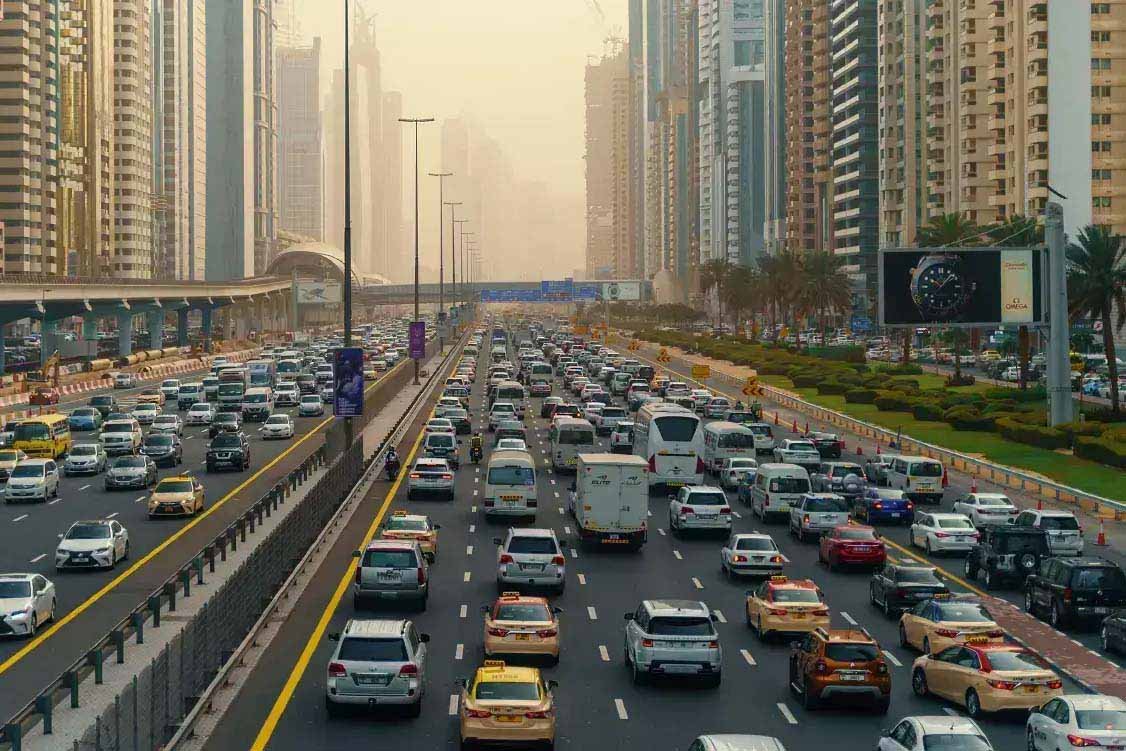
Due to Dubai's high popularity, both with tourists and by expats, Dubai has become increasingly crowded in recent years. This is reflected not only in the rising prices but also in the traffic. During rush hour, the main arteries are completely overflowing and traffic jams regularly form.
Those who don't have a typical 9-5 job can escape it to some extent, although traffic-wise, it's rarely quiet in Dubai, except on Sundays.
Prerequisites
Compared to other countries, there are very low requirements for emigrating to Dubai. You only need to bring enough money to sponsor yourself for the VISA through company formation or property purchase and then pass the medical test. As long as you do not bring any sexually transmitted diseases or polio, that also poses no problem.
Otherwise, there are no restrictions on countries or certain groups of people. Anyone who abides by the law is welcome. However, those who do not will also be quickly turned away or deported. Dubai does not tolerate troublemakers or criminal individuals.
However, you must also be able to afford to live, because the Cost of living in Dubai are definitely higher than in many European cities. Those who cannot afford it should definitely not emigrate. You probably won't be happy in this city with an income of less than €5,000 per month. Ideally, you should earn €6,000-€7,000 and upwards, as you have to pay for everything privately. However, those who earn well will save a lot of money in Dubai, as there are no income taxes.
Process
The emigration process can be broken down into several stages. Below is a brief step-by-step guide for emigrating to Dubai.
1. Deregistration
De-registering with the registration office is the easiest part of moving away – and at the same time the most frequently misunderstood. This is because formal de-registration alone is not sufficient in Germany, Austria or Switzerland to effectively end tax residency. In all three countries, what matters is not where you are registered, but where your actual centre of vital interests located.
The tax office examines a number of factors: Anyone who still has their own flat, a vehicle registered in their name, active health insurance, ongoing club or society memberships, an active tax advisor or close family ties in their country of origin risks being further classified as a tax resident – despite formal deregistration.
A clean deregistration therefore requires the complete dissolution of all points of contact: tenancy agreement or transfer of ownership of the flat, cancellation of health, liability and life insurance policies, deregistration of the vehicle, cancellation of club memberships, termination of standing orders, and formal deregistration with the responsible authority. Tax office with written confirmation of tax emigration.
In Germany is also recommended, obtaining a so-called Exemption certificate at the tax office, which confirms that no further tax claims exist.
In Austria is it necessary to actively inform the tax office about the move and to submit a final tax return for the year of departure – the so-called short financial year.
In the Switzerland The process varies by canton, but fundamentally, deregistration with the municipality and the cantonal tax office is mandatory, along with a final tax assessment for the year of departure.
Another often forgotten point: Anyone who spends a significant amount of time in their home country after deregistering – as a rule of thumb, more than 183 days per year – risks being classified as a tax resident again. The days spent in the home country should therefore be consistently documented and kept clearly below this threshold. In short: a clean deregistration is not a bureaucratic act, but a strategic measure that ideally 6 to 12 months before planned departure should be planned with a specialised tax advisor.
2. Health Insurance
The next point is, the conclusion of a new Health insurance. Taking out insurance is also legally mandatory in Dubai. You must be insured locally at the latest. There are generally two options to choose from: international health insurance or local health insurance.
Anyone who travels a lot and doesn't just stay in Dubai all year round should consider international health insurance. This not only provides cover in the UAE but also in other parts of the world and covers medical costs (depending on the tariff/package). Popular providers include Passport Card, April, or Foyer.
However, there are also affordable local insurance policies that make sense if you are in Dubai for most of the time anyway. Some example rates are listed below.
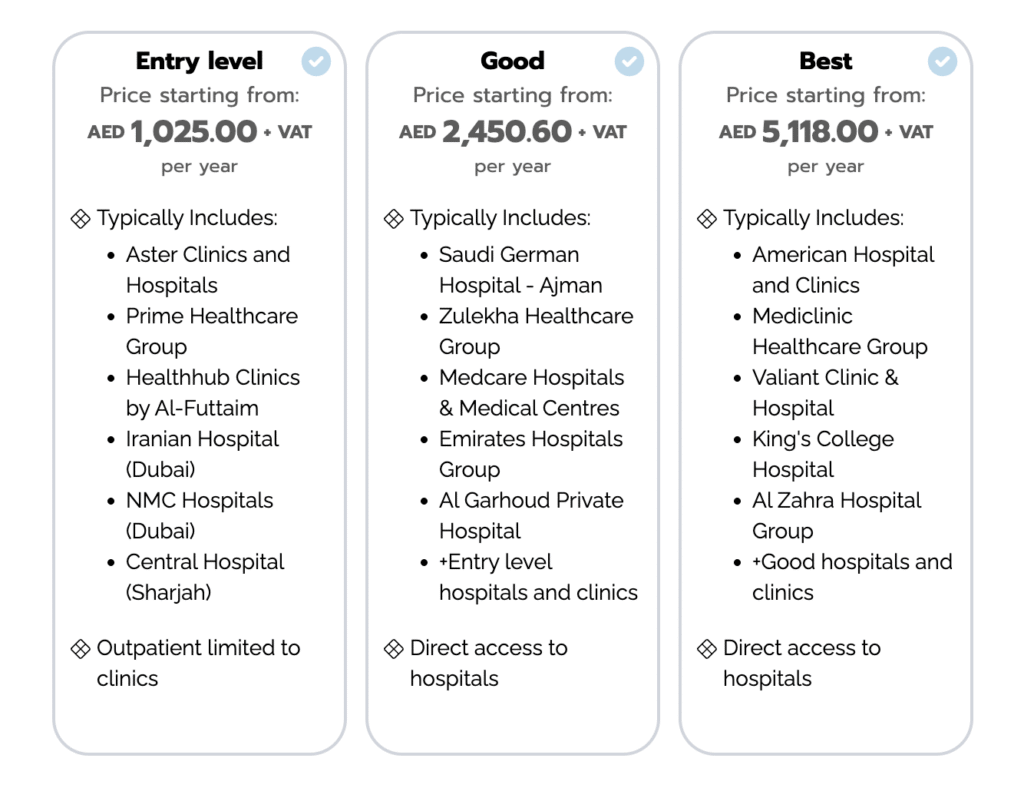
We would strongly recommend the BEST package offered by this insurance, as the hospitals mentioned are among the best in Dubai and this is not an area where one should try to save money. Furthermore, this is only equivalent to €100 per month.
3. VISA Sponsor
Who to live in Dubai requires a residency visa. This must be sponsored. There are several options, with most expats choosing one of the following three: a job, setting up a company, or buying property. There are further options for specific professional groups, but these are not relevant for most people. The second option is the most popular, as most people need a company anyway to conduct business. However, many people also set up a company solely to obtain a residency visa.
Company formation, property purchase or other employment can already be handled remotely. You don't need to be on-site for this. However, you should definitely seek advice beforehand, as there are many small details to consider, especially when it comes to the Starting a company in Dubai goes.
4. VISA Application
Depending on the type of visa you opt for, this step will vary. For example, after setting up a company, you'll need to apply for an Employment Visa. This multi-page form must then be submitted to the authorities or the Freezone. Processing usually takes 3 working days, after which you'll receive your first document, the provisional eVisa, short for Employment Visa.
This document is valid for two months and allows entry into the UAE during this time.
5. Entry / EVISA
Once the company has been founded and the EVISA has been obtained, you can enter the country within 60 days. It is still recommended to print out this EVISA and show it at the passport control upon arrival. Upon entry, you can also get a temporary phone number at the airport from Du, Etisalat, or Virgin. This is not compulsory, but it can be practical later on. You will also need a local number for opening a bank account. More on this later.
6. Medical Test
The first step on-site is the medical test. This takes place in one of the numerous facilities and consists of a chest X-ray and a blood sample. You will be tested for polio and sexually transmitted diseases such as HIV. Therefore, it is relatively harmless for anyone coming from Europe.
As a rule, this does not take longer than 30 minutes, including waiting time. The result is then sent to you by email within a few hours. You then need to submit this to the authorities for the visa process to continue.

7. Biometrics / ID Application
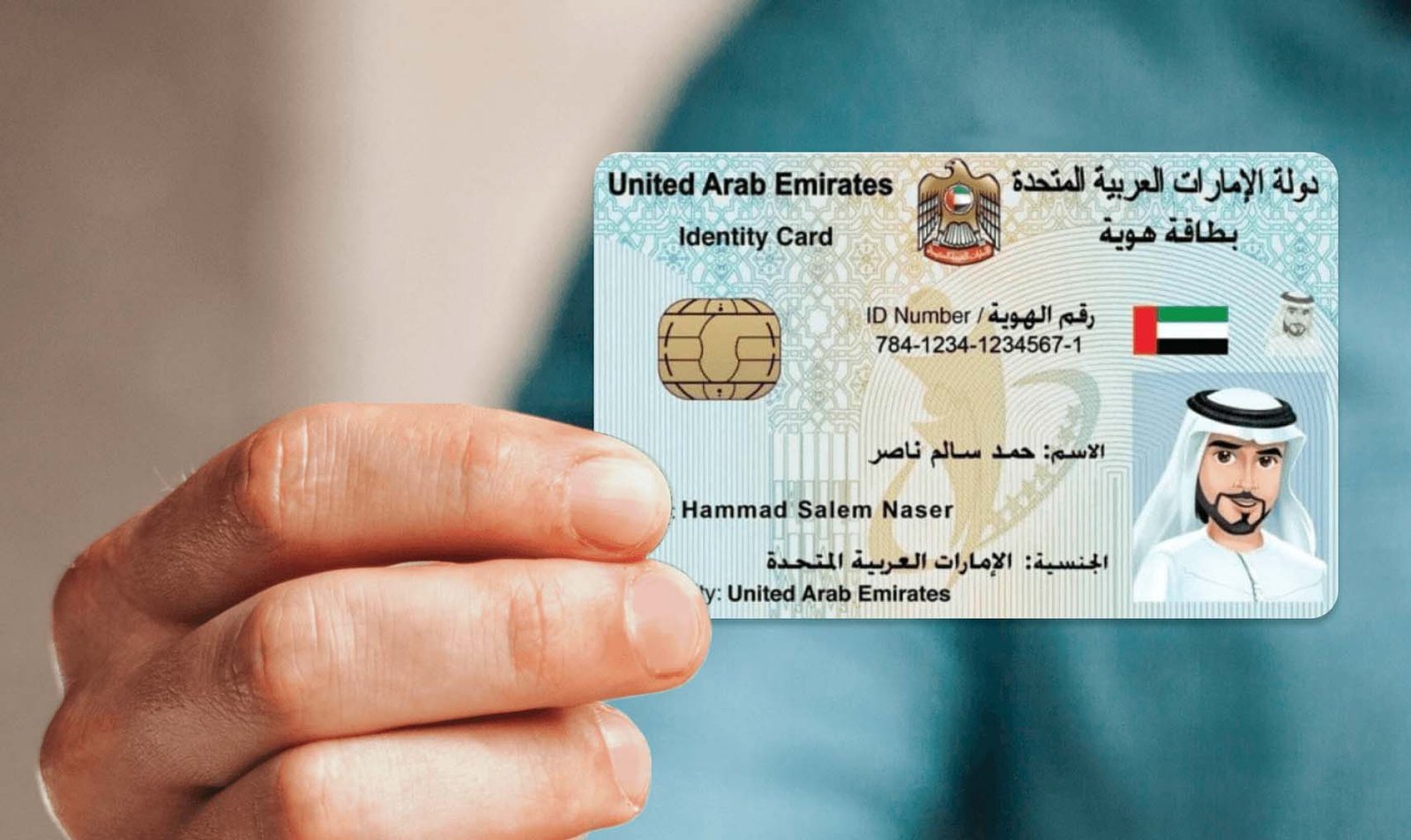
Afterwards, you also fill in the application for the Emirates ID. This is the key document you will need for all further steps.
With this application, you then go to a Typing Centre, where you have your biometrics taken. This involves just taking your fingerprints, which will later be stored on the Emirates ID. This way, you can later use the Emirates ID also receive documents, sign them, and conclude contracts.
7. Resident Permit / Emirates ID
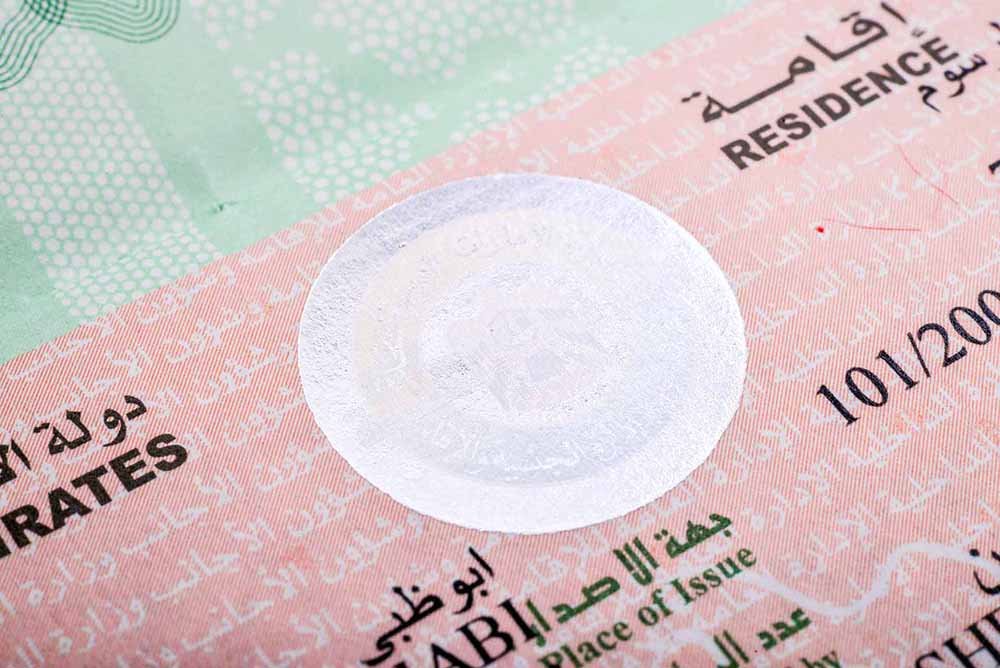
After a few days, you will receive the residency visa digitally for download. With this, you are now officially a resident of the UAE. Previously, it had to be physically affixed to your passport, but now it is fully digitised.
Within a few days, you will receive your Emirates ID by post at the specified address. With this, you are now fully able to live and conduct business in the UAE. The Emirates ID allows you to open bank accounts, enter into rental agreements, rent cars, and do much more in the UAE.
8. Account Opening
This is followed by Opening an account with a local bank in Dubai. There is a wide variety of options available, ranging from local banks and fintech companies to large international banks such as HSBC. The right bank needs to be chosen depending on your needs and requirements. Popular banks among expats include Mashreq, ENBD, and Wio. Wio is a modern fintech company and can be relatively easy to open an account with, if you know how.
Generally, you should be well-prepared when opening an account to avoid rejection.
The process can be handled remotely, depending on the bank.
9. Property
Finally, of course, you’ll need a place to live. You can find one via Propertyfinder.ae, Bayut.com or through a trusted estate agent. Whether buying or renting, almost all property deals in Dubai are usually handled by an estate agent. For rental contracts, a commission of 5% of the annual rent is charged, and for purchases, 2% of the total price plus an additional 4% DLD fee.

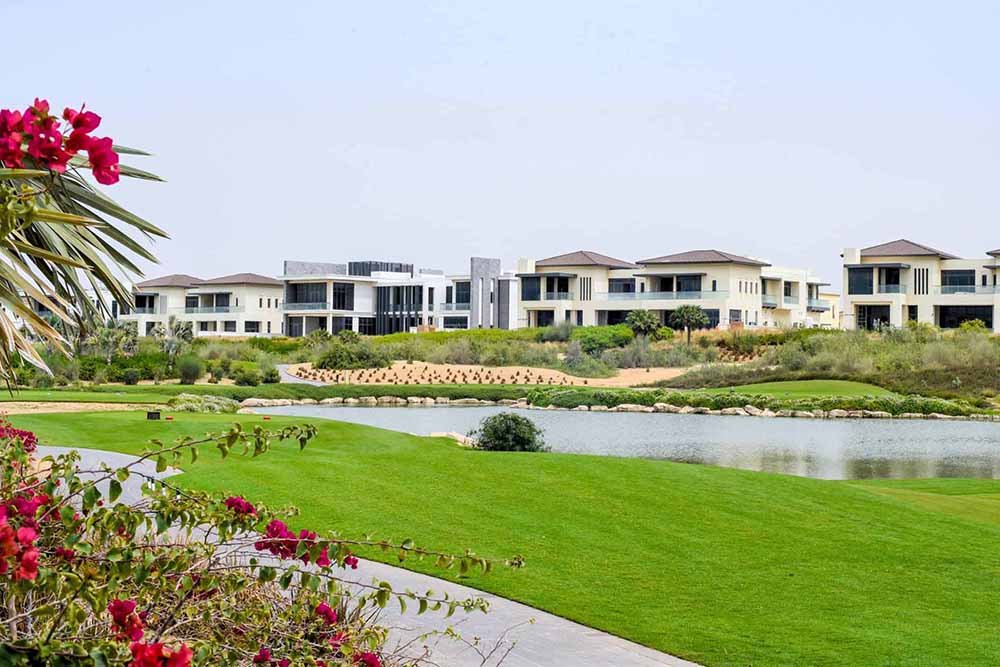
This point is definitely not to be underestimated. Ideally, you should definitely spend the first few days and weeks in an Airbnb and even change neighbourhoods. This allows you to get to know the city better and what you ultimately like. most popular areas among expats in Dubai are among others:
- City centre
- Business Bay
- Creek Harbour
- Dubai Hills
- Emaar Beachfront
Costs
The total costs of emigrating are, of course, very individual. Key factors influencing the costs include:
- Number of VISAs required
- Type and number of licenses
- Removal company (if necessary)
- Flight tickets
Those emigrating to Dubai alone without significant possessions and having an agency handle the entire process will typically pay between €6,000 – €10,000. However, this includes a full-service package where everything is covered and optimally arranged or organised.
Important: Attention Required
When emigrating to Dubai, mistakes repeatedly occur that lead to emigration failure and cause expats to leave Dubai or the UAE again. Below is an overview of the biggest mistakes that can occur during emigration to Dubai.
Exit tax
Anyone emigrating from a German-speaking country to Dubai will encounter their own form of exit taxation in each of the three countries – and the differences are considerable. In Germany For shareholders in a GmbH holding a stake of at least 1 %, exit taxation applies in accordance with § 6 AStG: Any capital gains accrued on the shares are deemed to have been realised at the time of departure and are subject to a 25% flat-rate withholding tax plus the solidarity surcharge – regardless of whether the shares are actually sold. A deferral, as would be possible within the EU, is not available in relation to the UAE as a third country.
In Austria the regulation is more broadly defined and affects a significantly larger group: According to § 27 (6) of the Income Tax Act Does moving one's residence to a non-EU/EEA country count as a deemed disposal of all capital assets in private assets – not just GmbH shares, but also Stocks, funds, bonds and cryptocurrencies. The tax rate applicable in this case is 27.5% capital gains tax on all accrued paper gains, payable immediately in the year of departure, with no option for deferral in relation to third countries such as the UAE. Anyone holding a crypto portfolio or a securities account with significant paper gains should therefore be sure to factor this in before leaving the country.
The Switzerland however, at federal level there is generally no capital gains tax on privately held securities – which at first glance makes emigration seem simpler for many Swiss. However, two essential points must be considered: Firstly, individual Cantonese in the event of moving abroad, potentially a so-called Tax apportionment tax on disclosed latent reserves in real estate or business assets. Secondly, at federal level, the taxation of Gains from the sale of material shareholdings (holdings of more than 10% in a corporation) which may be deemed to have been realised upon departure – particularly if there is a close temporal link between the departure and a subsequent sale, which the FTA may regard as tax avoidance.
In all three countries, the same basic principle applies: The sooner you plan, the more can be legally optimised. – however, anyone who emigrates at short notice and unprepared risks a tax burden that will consume the supposed benefit of moving away for years.
De-registration does not mean tax emigration
A recurring error: Many people believe that officially deregistering with the registration office is enough. Unfortunately, this is incorrect. In both Germany and Austria, the tax office does not check where you are registered, but where the actual centre of vital interests This is located. Anyone who de-registers but still has a flat, a car, health insurance, an active tax advisor, club memberships or close family ties in their country of origin risks being classified as a tax resident – with all the tax consequences. Clean de-registration therefore not only involves a visit to the registration office, but also the cancellation of all contracts that could establish a permanent centre of life in the country of origin: rental agreements, car registrations, statutory health insurance memberships, club memberships and similar. Written confirmation from the tax office regarding the tax departure is recommended in both countries and should be actively requested.
High cost of living
While one does not have to pay taxes or social security contributions in Dubai, it is the case that the Cost of living significantly higher than in Central Europe. This is, of course, always dependent on one's individual standard of living, but as an individual, you generally have to expect around €5,000 and upwards if you want to live reasonably. Many people who are new to Dubai are tempted to live the luxury of others and share it online. Here, there is a risk of living beyond your means and ultimately not saving any money, unless you have control over your finances.

Alcohol or drug use
The laws regarding alcohol consumption are very relaxed in many European countries, especially Germany and Austria. However, one should be aware that in the UAE there is no tolerance for drink-driving, let alone drugs. Although penalties have been reduced, one must still expect considerable fines or even prison sentences if certain laws are disregarded. In principle, Alcohol is in Dubai permitted in private settings or in certain establishments, but not in public.
Drugs such as marijuana, cocaine, or similar substances are severely punished.

Disrespect
Showing respect towards others is not only a matter of virtue, but also a legal obligation. Those who insult or offend others and cannot control themselves can face charges and fines. Even simple comments sent via WhatsApp or email can be sufficient. In general, politeness and respect, especially towards other people and cultures, are legally mandatory and the penalties are severe.
Expectation
One of the crucial points when emigrating to Dubai is the mentality and expectations you bring with you. Many people, especially Germans, take their old mindset with them to Dubai and expect exactly the same things here as in their home country. This concerns not only the laws but also simple everyday matters such as punctuality or accuracy. Whether these characteristics are good or bad is something everyone has to decide for themselves. The fact is, in the Arab world, including Dubai, certain things simply happen differently, and sometimes you have to be patient or adjust your expectations. Some things happen faster, but some also happen slower.
Experiences
Our experience shows that emigration to Dubai has significantly increased in recent years, and for good reason. Those who inform themselves beforehand, are aware of the advantages and disadvantages, and get an impression on-site, will emigrate successfully.
Emigrations generally only fail if you are uninformed or if you believe you can do everything yourself and do not need service providers for important decisions such as emigration, clarification of exit taxation and local immigration in Dubai.
Häufig gestellte Fragen
An overview of the most frequently asked questions when it comes to emigrating to Dubai.
How much money do you need to emigrate to Dubai?
This naturally depends heavily on the standard of living one wishes to lead. There are guest workers who live on around €1,500. As a rule, if you wish to maintain a Central European standard of living, you should earn at least €5,000 per month in Dubai as an individual. Ideally, for more leeway, a budget for hobbies and luxuries, you should be earning €7,000 per month.
What professions are in demand in Dubai?
Generally, European skilled workers with good training are sought after. Primarily areas such as
- IT
- Finance
- Engineering
- Construction
However, one should have a solid education and professional experience. It will be very difficult for career changers.
What do I need to consider when emigrating?
Anyone who has paid into statutory pension insurance for years – be it the German Rentenversicherung (DRV) or the Austrian PVA – quite rightly wonders what happens to it if they emigrate to Dubai. The good news is that acquired pension entitlements do not expire. Anyone who has reached the required minimum insurance period (5 years in Germany, 15 years in Austria) can also claim their statutory pension from Dubai later on – it will be paid into a specified account. The bad news is that Dubai has no social security agreement with either Germany or Austria, which means that years worked in Dubai do not count towards pension entitlements. Therefore, those who emigrate early and do not reach 35 or 45 years of contributions must make private provision for their old age. In Dubai itself, there is no statutory pension insurance obligation for expats – private retirement provision is entirely the individual's own responsibility.
What happens to pension contributions already made?
There are several points that you absolutely must consider when planning to emigrate to Dubai. Here is an overview of the most important ones:
- The most important point is, above all, to bring sufficient budget or income. In the UAE, all services must be paid for privately, meaning life is more expensive than in Central Europe. However, those who earn well can still profit greatly, as there are no taxes at the private level.
- Furthermore, one should definitely consider the exit tax; for many, it's a trap and can lead to legal consequences if one doesn't proactively plan.
- This also includes cleanly deregistering with the tax office and registry office, as well as terminating contracts and insurance policies.
- Furthermore, one should have a professional contact person on site for visa applications, company formation, real estate, insurance, driving licences, and similar matters, in order to ensure a smooth process with the Emirati authorities when immigrating.
Summary
Emigrating to Dubai offers many advantages and has rightly been so popular for years. In addition to taxes and high security, Dubai also offers extensive infrastructure and has been attracting more and more families in recent years. The requirements for emigration are low; the primary factor is money. If you have that, you can emigrate within a few days.