
More and more people want to set up a company in Dubai. On the one hand, to obtain a residency visa for the Emigration to Dubai to access, but also to benefit from the tax advantages of the metropolis on the Arabian Gulf.
Everything about company formation in Dubai, from requirements and processes to costs and ongoing compliance, in this comprehensive guide.
Advantages
Dubai is not only a land of extremes but also a serious global economic player. The city combines modern infrastructure, economic stability, and an advantageous geographical location. Here are some reasons why Dubai is particularly attractive to entrepreneurs and founders.
1. Location
Dubai acts as a bridge between the emerging markets of the East and the established markets of the West. This strategic location makes it a significant logistics and trade hub. In the meantime, Dubai has also become a technology hub, with numerous large IT corporations setting up in the city on the Gulf.
The government is also promoting this development and is even awarding Gold Visa for people in the software and AI sector, to attract more high achievers and experts in this field.
Numerous major international events such as GITEX (largest Tech, AI & StartUp trade fair) or Big 5 confirm this development.
2. Economic Stability
Dubai has proven resilient to global economic fluctuations through its impressive economic stability and diversification of economic sectors. Swift political decisions promise innovation and legal certainty for long-term business decisions.
The figures confirm this. Dubai has consistently achieved stable economic growth in recent decades. Further economic data such as low unemployment, low inflation and bank ratings confirm this. More on this shortly.
In general, the UAE is very stable not only economically but also politically. Dubai, Abu Dhabi and Fujairah are among the safest cities in the world, and everyday crime is almost non-existent.
3. Tax advantages
The UAE, or Dubai, offers extremely attractive prospects for companies and entrepreneurs alike. Tax advantages.
Essentially, on a private level, no taxes are levied on salaries, dividends, capital gains (including crypto gains), or rental income. Therefore, as a private individual, you are largely tax-exempt.
The company itself in Dubai fundamentally pays no corporate tax on revenue up to 3,000,000 AED (€700,000), as it is still the Small Business Relief . Companies above this turnover threshold pay 9% corporation tax on their profits. However, there is also a tax-free allowance of around 375,000 AED (just under 85,000 €), which is not subject to tax. Combined with a salary, this means that several hundred thousand euros can be paid out tax-free.
In Freezones, there are still certain activities that are completely tax-exempt. The so-called Qualified Activities. This includes, among other things, shipping, logistics, manufacturing/production, and commodity trading.
Another important point is value added tax (VAT). This becomes applicable and must be registered if a company generates more than AED 375,000 in turnover with businesses in Dubai (both within free zones and on the mainland), and the rate is 5%. For most internationally oriented companies, however, this is not relevant, as their customers are spread across the globe. However, there are a few things to bear in mind here, particularly regarding (digital) products sold to the EU. (Keyword VAT OSS or MOSS)
4. Banks
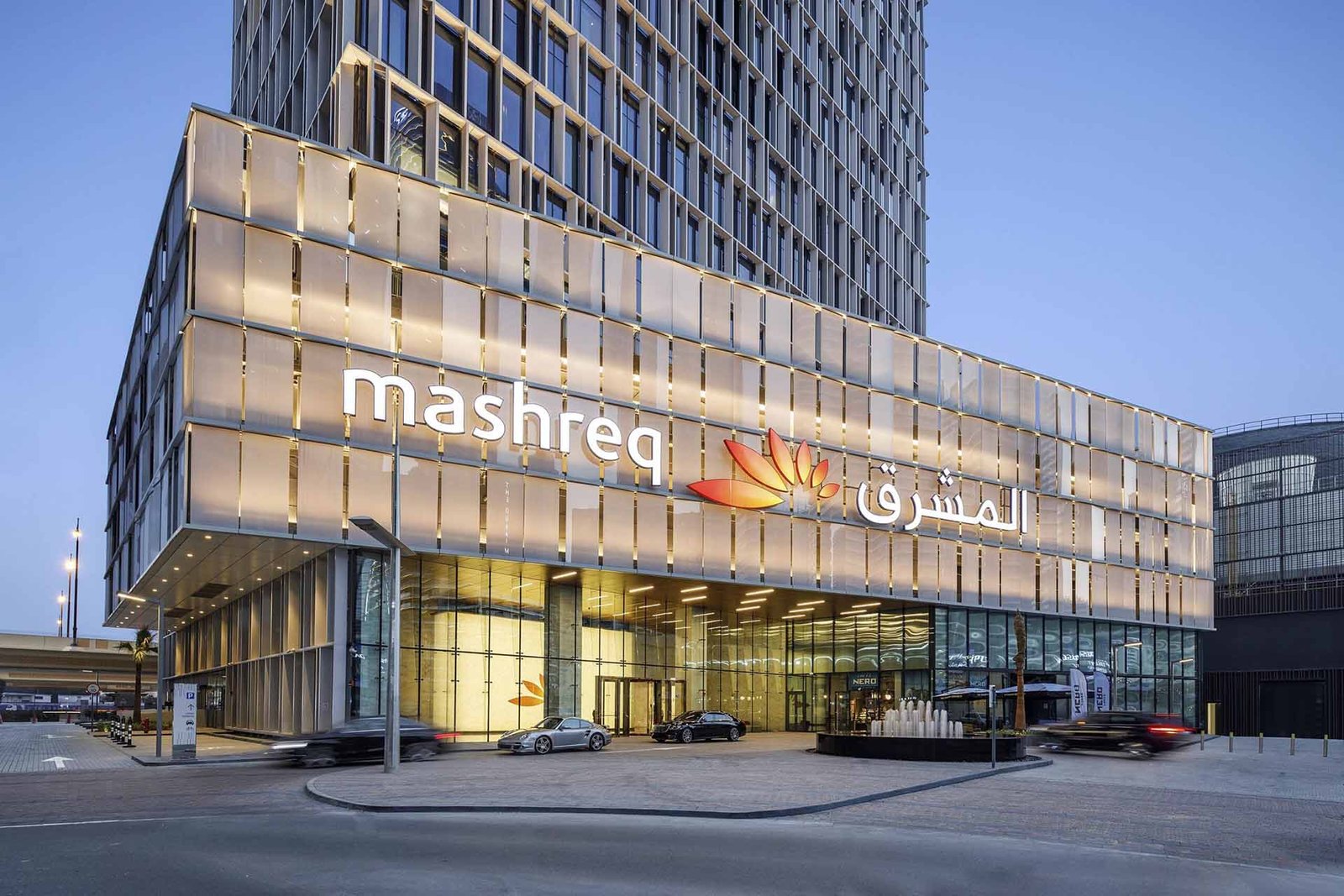
Dubai and the UAE, in particular, offer a great banking environment, which is not the case in every tax-free country. The major banks are partly state-backed and offer stable, secure, and convenient banking, both for private individuals and businesses. Banks in Dubai FAB, Mashreq or ADCB are highly recommended. However, numerous international large banks have also established themselves in the UAE. These include HSBC, Citibank and other big players.
For entrepreneurs, this is a crucial factor, because without a bank, every company stops. Especially in Dubai, there are numerous banks that can support companies in every situation. Starting from start-ups, through medium-sized businesses, right up to international corporations.
Due to tax advantages, a quick setup, and good infrastructure, companies in Dubai are definitely one of the most sought-after setups in the offshore company sector. Other destinations for emigrants, such as Cyprus or Georgia, do not offer anywhere near the same banking standards as the UAE.
In Dubai, banks also offer numerous lifestyle benefits through credit cards. In addition to the American Express Platinum MENA, you can also obtain cards such as the Marriott Bonvoy World Elite Mastercard or the Skywards Infinite Credit Card. Both cards offer significant advantages in terms of hotels from Marriott and the airline Emirates.
In addition, Mashreq, FAB and other banks are currently still offering interest rates of around 5 % per annum on savings accounts.
5. Residence visa
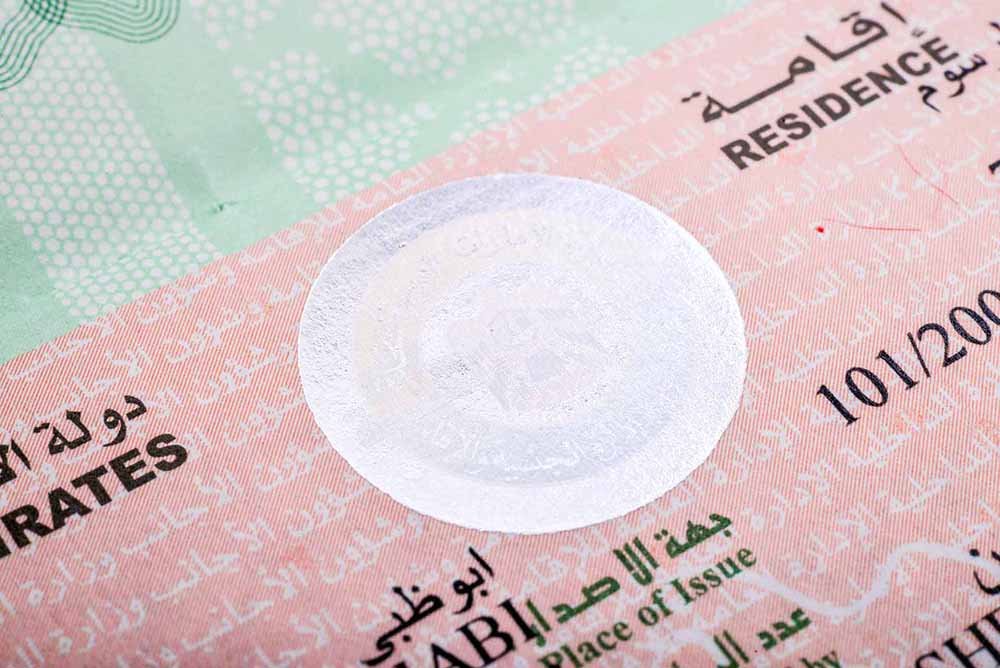
One of the most important factors in favour of setting up a company in Dubai is the possibility of being able to UAE Residence Visa to obtain. Because you can only emigrate to Dubai if you have a valid residence visa. This is usually obtained through employment. The visa is obtained through employment in one's own company. Many investors, traders, or other HNWIs actually use the company only for this purpose and do not run an actual business. This is not necessary either.
Furthermore, there is no requirement to distribute salaries. As long as the company remains active, the license fees are paid annually, and an annual financial statement (even with zero AED revenue) is submitted, the company and the visa will remain valid. More on this later.
Prerequisites
In principle, there are no legal requirements for setting up a company in Dubai. Most licences are free, meaning they are unregulated. Only certain licences for specialised activities (doctors, lawyers, pilots, etc.) require clearance from the relevant authority. More on this later.
Otherwise, anyone without a serious legal record in the UAE can establish a company in Dubai.
Basics
In general, there are a few things one needs to understand before setting up a company in Dubai. Here are the most important aspects of establishing a company in Dubai that must be taken into consideration.
Legal form
Before setting up, you need to decide whether you want to operate in a free trade zone, the mainland or offshore. Depending on the requirements, the different options have individual advantages and disadvantages. For certain business activities, it is also mandatory to choose a specific legal form.
Freezone (FZCO / FZ-LLC)
If a company is to be wholly owned by 100%, the Setting up a company in a Dubai Freezone makes the most sense. The concept of free trade zones was introduced by the Dubai government to attract foreign interest in establishing businesses in the city. Essentially, these are special economic zones in which entrepreneurs enjoy full property rights, a corporate tax rate of 0–9% (9% applies only to UAE companies with a turnover of AED 3,000,000 or more) and a personal income tax rate of 0–9%.
However, one of the most significant limitations of operating a business in a free zone is that you are not permitted to trade directly with the local UAE market. There are, however, exceptions for certain services.
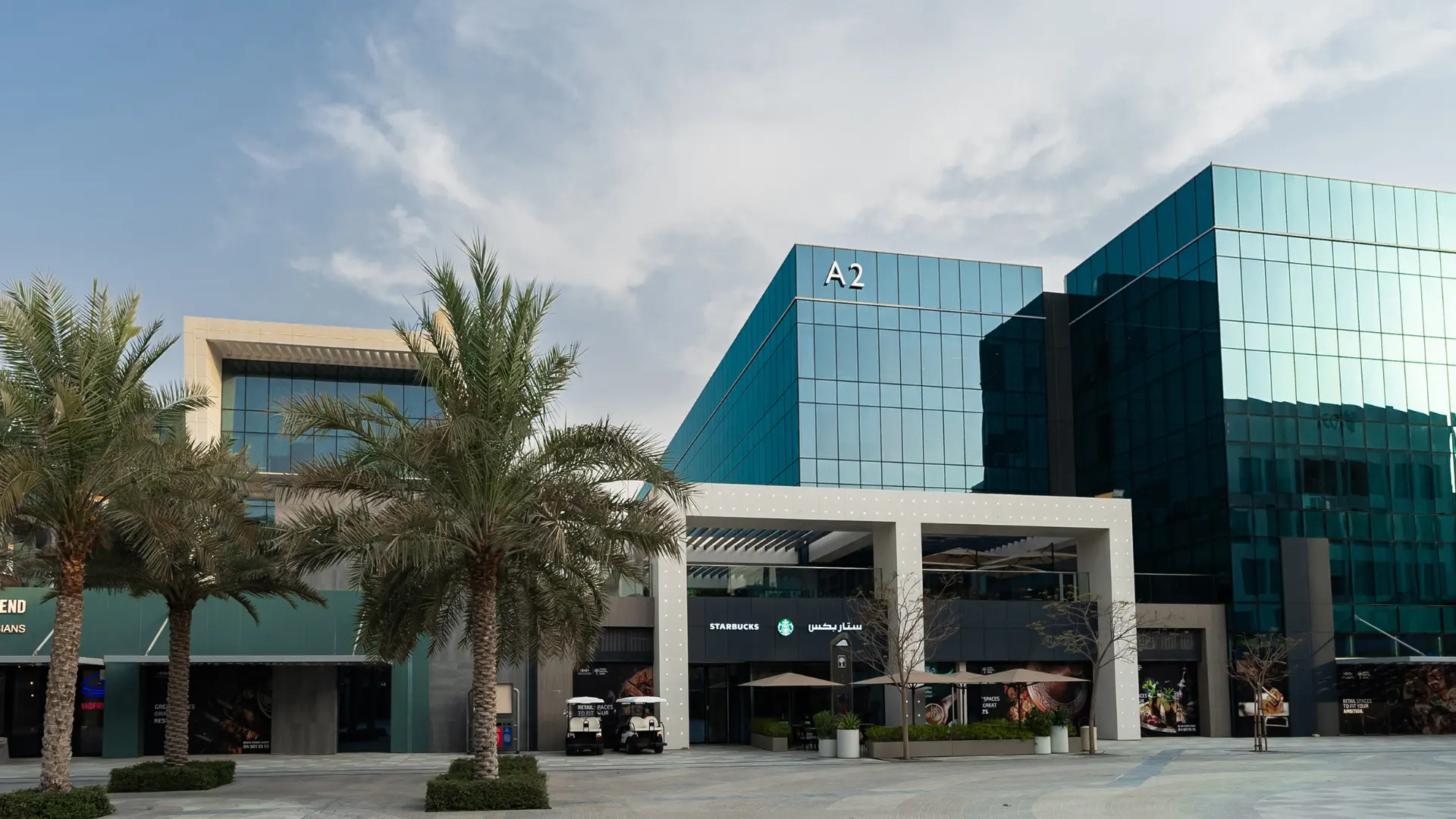
There are currently over 20 free zones in Dubai. Typically, each free zone is oriented towards a specific industry and offers licences to companies within these categories. Here are some examples:
- RAKEZ
- Square
- DIEZ (Dubai Integrated Economic Zone) – including Dubai Silicon Oasis (known from Company formation through IFZA)
- JAFZA (Jebel Ali Free Zone)
- Dubai International Financial Centre (DIFC)
- Dubai Internet City (DIC)
Depending on the business activity you wish to engage in, the correct Freezone and suitable licences and activities must be chosen. More on this later.
Mainland (LLC)
The LLC is one of the most common legal forms and offers a balanced mix of flexibility and limited liability. This option is particularly suitable for small and medium-sized businesses that are active in Dubai and have customers there (especially for product sales).
Mainland companies generally enjoy a higher reputation, have an easier time opening bank accounts, and are permitted to conduct business activities anywhere geographically. Furthermore, there are more licenses available for them than for Freezone companies.
However, the option is crucially more expensive as one has to rent an office. The cheapest “compliance offices” start at €2,000 per year.
Offshore
Offshore companies can also be registered in a free zone and enjoy many of the same benefits. However, it is not a substitute for a free zone company. The main difference between a free zone company and an offshore company is the business operation. Offshore companies are allowed to conduct their business outside the UAE, not within. Furthermore, they are not required to deposit any minimum capital before establishment.
However, unlike a company in a free zone, a sponsor is required to limit your foreign shareholding to 49%.
Licences and activities
In addition to deciding on a territory, one must also determine the type of license required. The Department of Economic Development (DED) is responsible for issuing licenses and there are 3 main types that can be applied for. These can also be combined with each other, and one is not limited to one license type. Different combinations are possible depending on the free zone, but they also usually increase the setup costs somewhat.
In addition, one should not combine too many licences or activities, as problems can arise, particularly with banks, if a company lacks a clear focus and tries to offer everything. More on this shortly.
Commercial Licence
To establish a company in Dubai that involves trading activities, including the buying and selling of goods, a trade licence is required. This licence can apply to companies involved in import and export, retail, logistics, travel and tourism, general trading, and real estate.
Industrial Licence
This type of licence is issued to companies that transform natural materials and resources into finished products, either manually or mechanically. This licence applies to companies such as those in the textile, metal, and paper manufacturing industries.
Professional Licence
The trade licence is issued to businesses operating as service providers, craftspeople, or artisans. Examples of businesses that apply for this type of licence include medical services, beauty salons, and repair services.
However, in practice, offshore companies are hardly ever established anymore. This is because full ownership is not possible, and opening an account proves to be quite difficult in practice. Those doing international business generally always opt for a Freezone company.
Company Formation in Dubai: The Process
The process of establishing a company in Dubai clearly differs depending on whether you are setting up a company in a Freezone or on the Mainland. The former, as mentioned at the outset, is faster, simpler and more cost-effective. However, it is not always suitable for one's own plans.
Below is a brief overview of both formation options.
Freezone Company Formation
The Setting up a free zone company in Dubai comprises eight essential steps.
1. Define business activities
The initial decision is to define the company's objective or business activity. This also determines the choice of free zone and, consequently, the licenses. Both are crucial aspects when it comes to legally carrying out the activity. More on this shortly.
2. Choice of free zone
As previously mentioned, there are over 20 free zones to choose from in Dubai. The type of company may influence which free zone you wish or need to set up in. Generally, it makes sense to locate yourself near companies in the same industry.
The choice of free zone is one of the most important factors, alongside the choice of licence, as these can differ significantly in various aspects relevant to the company. These include, among others, the following points:
- Licence selection
- Licence fees
- Infrastructure (offices, storage space etc.)
- Location and Connectivity
Those who choose the wrong free zone cannot simply switch later. A closure and new establishment would be necessary, which is very costly. Therefore, one should obtain comprehensive information beforehand or seek professional advice.
3. Foundation
Thereafter, the company is founded. For this, all necessary information must be submitted to the relevant free trade zone. The most important information is outlined below:
- Company name When choosing your company name, it is important that it complies with the strict naming conventions of the UAE. Names containing offensive expressions, which could be perceived as religiously offensive, or refer to political groups or the Mafia are prohibited. If a company is named after a person, proof must be provided that this person is a partner or owner of the company (initials or abbreviations are not allowed).
Naming your company can be a complex process. You can save time and effort by consulting an expert to help you navigate the regulations and get your name approved.
- Licences As mentioned at the outset, it is essential to choose the correct Freezone and also the necessary licences or activities for the desired business undertaking. Should there be any problems with this, it could lead to penalties being incurred, or even worse, the company having to close and re-establish. When choosing the licences or activities, it is important to select the correct ones and specify a primary activity. If the licence is regulated, it is necessary to obtain approval from the relevant authority. An example of this would be freelance influencers or influencer agencies.
Furthermore, one should ensure that the company has a clear focus. A combination of too many licences and activities not only causes higher start-up costs, but can also lead to banks rejecting the company when opening a business account. The reason for this is that banks cannot recognise a clear focus or a comprehensible business model.
- Visa selection It is crucial here not only to state the number of visas but also the type of visas. Each visa costs a fee, and you should be clear in advance about how many visas you need. Furthermore, it is crucial which visa you require (Employment, Investor, etc.). This also determines the cost, as well as other factors such as entry requirements. (An investor only needs to enter the country once per year. Normal employees at least twice a year).
- Social structure As with any other company, the corporate structure must be defined here. This includes owners (private vs. corporate), as well as General Manager, Director, and Secretary.
- Passport A valid passport is, of course, also necessary for incorporation. This must be submitted as a photocopy during incorporation.
Once this data or documentation has been submitted, confirmation by the authority and the official registration usually takes a week.

Compared to GmbHs in Austria or Germany, no share capital needs to be paid in. A sum must be stated at the time of incorporation, but it does not need to be paid in or proven. Consequently, the incorporation costs for the company itself are usually considerably lower than in Germany, Austria or Switzerland.
4. Entry visa
Once a company has been founded, one is (usually) employed as a managing director, referred to here as General Manager. This employment grants an entry visa via Employment. This is absolutely essential for entering the UAE. A tourist visa is not sufficient for the subsequent step. Mostly, the visa via Employment is issued within a week of application.
5. Emirates ID
The next crucial step is the application for Emirates ID, the key document to be fully business-ready in the UAE. The Emirates ID is an identity document that enables all economic activities in the UAE. These include, above all:
- Opening an account (Private and Business)
- Rental / Purchase of Real Estate
- Telephone and Internet Contract
- UVM.
With the Emirates ID, you also receive a document that simultaneously serves as your residency visa for Dubai. There are different types, but with normal employment, the visa for Dubai is valid for 2 years.
How does one get an Emirates ID?
The following steps are necessary to obtain an Emirates ID:
- Entry via Employment Visa
- Medical Test
- Application for EID at the local authority
- Biometrics
After a few days, you will then receive the Emirates ID by post. Those who are with Family and/or children emigrating to Dubai, This requires [her/him/them] to sponsor a wife and children.
6. Bank account
Once the company is established and you have your Emirates ID, you can correspondingly get a Open a bank account in Dubai. There is a wide range of local and international banks to choose from. Additionally, there are also FinTechs, which are of interest to smaller companies.

7. Continuous Leadership
From 2023 onwards, businesses in Dubai will be required to register with the tax authorities on an ongoing basis. This also entails keeping accounts and potentially paying tax. A 9% corporation tax is payable on profits exceeding the USD 100,000 threshold. (Exceptions, as mentioned above, apply to small businesses with an annual turnover of less than AED 3,000,000.)
Corporate Tax Registration for the company at the Far Trade Agreement is legally mandatory within 3 months, even if you have no turnover. In addition, you must also submit the VAT return on a quarterly basis, provided this is applicable. If this is not applicable, you can request a VAT exemption.
Once a year, the tax return must be filed or the annual financial statement must be prepared and submitted. Even if no revenue was generated because the company is only being used for the visa, you are still obliged to submit a Simplified Report.
Mainland Company Formation
The Setting up a Mainland company In Dubai, things are a little different and generally more complex and expensive. However, for certain ventures, it is necessary to choose this legal form. Generally speaking, anyone operating and conducting business locally in Dubai must establish a Mainland company.
1. Business activity / Select licence
The first step is similar to a free zone company, you need to choose a license. However, the selection of licenses or business activities is different and more extensive. The complete list can be found at Dubai Economy and Tourism.
As explained at the beginning, all licenses for local business activities, which are not permitted in Freezones, are included here. Furthermore, it should be noted that certain activities, particularly in the infrastructure sector, require a local sponsor. These include telecommunications and energy supply, among others.
2. Choose names
Next, a suitable name must be chosen which also complies with the DED's regulations. In practice, the legal form LLC is then added to the name. For example, MBD Consulting LLC.
3. Initial Confirmation Requests
With the name and the company's purpose or the licence to be carried out, the documents can be submitted and the initial confirmation can be sought. Once that is completed and the government approves the company, it will proceed.
4. Memorandum of Agreement
Next, the task is to draft a Memorandum of Association, or MOA for short, for the company. This legal document regulates the distribution of owners or shares, capital and rights among them. Subsequently, it must be authenticated by a local notary.
5. Office
Subsequently, it is necessary to rent a physical office. This step is crucial and also a fundamental difference compared to Freezone companies, as a Freezone company can exist with a virtual office. The office must be physical and lockable. A desk in a coworking space is not sufficient. The cheapest options cost approximately €2,000-€3,000 annually. The EJARI certificate will ultimately be issued to the office. Dubai Land Department issued, this confirms the tenancy and legitimises the company.

6. Submission of all documents
Once you have the tenancy contract or Ejari confirmation, you can submit this along with the MOA and the applied license with the pre-approval from step 3. Payment of licenses and other fees is also due here.
All further steps regarding Emirates ID, visas, account opening, and ongoing compliance are the same as with the Freezone company.
Costs of company formation
The costs for the entire setup vary greatly and depend on the factors mentioned above such as licences, free zone and company structure. However, as a general rule, it can be said that establishing a free zone company in Dubai (incl. 1 VISA) with professional implementation and support typically costs €7,000. The annual costs then amount to approximately €5,000 for a company with one visa.
For mainland companies, one can expect €13,000 – €15,000, depending on the licenses and the number of VISAs the company should carry. The annual costs are also higher here than in a free trade zone, amounting to €7,000 – €8,000.
The more VISAs the company bears or sponsors, the more expensive the setup and also the annual renewal are. As a rule, there are around €1,000 in additional costs per year per VISA for the company.
Here's an overview of the costs for setting up a company (including visa).
- Company formation: €4,000
- Office address: €0 (Virtual Office)
- 1x Residence Visa: €1,000
- Medical Check: €200
- Biometrics: €250
- Emirates ID: €100
- Agency Service: €1,500-€2,000
- Total: €7,000 – €8,000
The ongoing costs are broken down as follows
- 4,000 € / Year for Company (Licence & Establishment Card)
- from €2,000 / year Bookkeeping, VAT and Year-end accounts (depending on turnover & volume)
- €800 Residence Visa Renewal every two years
- €300 Medical Check & Emirates ID every two years
FAQ
Below is an overview of the most frequently asked questions regarding company formation in Dubai.
Setting up a company in Dubai while residing in Germany - is this possible?
Theoretically, of course, this is possible. Anyone can set up a company in Dubai, regardless of their place of residence. However, whoever lives in Germany and manages the company from Germany must also pay taxes on it in Germany.
This is because the Place of Effective Management is decisive for the tax domicile, and not the place of incorporation or registration.
However, anyone who manages to rent an office in Dubai and hire a managing director there can also live in Germany as the owner, and the company will be considered tax resident in Dubai, as it is managed there.
Setting up a company in Dubai while residing in Austria - is that possible?
The same principle as in Germany is also applied in Austria. Theoretically, one can found a company in Dubai while residing in Austria. However, one remains subject to tax in Austria if there is no local substance in Dubai, such as an office and management.
Establishing a company in Dubai without residency - is it possible?
By now, the compliance requirements for founding a company in Dubai have increased, and you definitely need to be able to prove residency. A utility bill with your name and address or a bank statement with the same information is sufficient for this.
Anyone travelling as a digital nomad needs a so-called compliance residence if they don't have a real one. Paraguay is popular for this, for example.
Whether someone actually lives there is not checked or cannot be checked.
Do I need to enter the country to found a company?
Freezone companies in Dubai can be established completely remotely. However, you must travel to the UAE for the visa process and bank account opening. Currently, there is only one bank in Dubai that allows for remote account opening, and that is ENBD. However, you must have been to Dubai at least once beforehand.
Which company should I set up in Dubai?
This depends primarily on the business activity and the location where the activity is carried out. Anyone wishing to set up a physical company in Dubai or the UAE will generally need a mainland company. A free zone company is definitely sufficient for international business. The latter is much more popular and cheaper.
The biggest mistakes when starting a business in Dubai
Here is an overview of the biggest mistakes that can occur when setting up a company in Dubai, and which should absolutely be avoided.
Incorrect Freezone election
The choice of Free Zone is crucial for numerous aspects when it comes to running a company in Dubai. If the wrong Free Zone is chosen, in the worst-case scenario, one might not get the right licenses, be unable to access adequate infrastructure or support, and ultimately, be unable to conduct business.
Banks also pay attention to which free zone you establish in, and this can be a reason for rejection.
No corporate tax registration
As many people set up a company in Dubai solely due to the corporate tax, the corporate tax registration is often forgotten. However, this is necessary even if the company is not conducting any activities or generating any revenue. Corporate tax registration is mandatory within 90 days of the company's establishment.
Missing authorisations
As well as choosing the correct licences, problems can also arise if one doesn't obtain the correct additional licences or permissions from various authorities. This is necessary for certain activities such as social media content creation (keyword Influencer Licence), strictly regulated trading activities or services in the Freezone or in Dubai.
Opening an account without the correct paperwork
Without an account, the company is de facto unable to do business. It is therefore all the more important to prepare for opening an account and bring the correct documents. In addition to the incorporation documents, the bank also requires further information about training, online presence, and LinkedIn. Those who provide no or incorrect information may be rejected.
Company formation without emigration
The most frequent question when setting up a company in Dubai concerns the tax situation for individuals who wish to retain their residency in Germany, Austria, or Switzerland. Here, it is important to be aware of some key legal principles:
Germany German tax law incorporates the worldwide income principle – anyone who is subject to unlimited tax liability in Germany (i.e. has their place of residence there) must pay tax on their worldwide income in Germany. In addition, for a Dubai company, the Foreign Tax Act (AStG) comes into play: if the company cannot provide sufficient proof of „economic substance” in Dubai (own employees, physical office, actual management on site), the so-called attribution taxation threatens – the profits of the Dubai company are directly attributed to the German shareholder and taxed in Germany. What is decisive here is not the registered office of the company, but the Effective Place of Management – so where decisions are actually made. Whoever runs the Dubai company from their sofa in Munich gains no tax advantage. Advice from a tax advisor specialised in international tax planning is absolutely recommended before setting up.".
Austria Similar regulations to those in Germany apply. Here too, the actual economic substance of the company in Dubai is crucial. Those who retain their place of residence but cannot prove genuine business activity in Dubai risk the Austrian authorities classifying the company as a domestic permanent establishment.
A Dubai company only fully unfolds its tax advantages if the entrepreneur themselves relocates their residence to the UAE or appoints a managing director on-site.
Summary
Company formations in Dubai are becoming increasingly popular. The advantages lie primarily in obtaining a residence visa, as well as low taxes and the excellent infrastructure for entrepreneurs in Dubai. Depending on the business activity and location, one must choose between establishing a company in a Free Zone or on the Mainland. The latter, while more expensive, is often necessary when building a physical business presence in Dubai.
Founding a company in Dubai, like in Germany, Austria, and Switzerland, is a process that should be carefully considered. However, if you have a clear goal, know what you want, and have a professional point of contact to handle the process on-site, it only takes a few days. For a no-obligation initial consultation regarding Setting up a company in Dubai You are welcome to contact us.